China / United States / Culture / Education
China Is Trending. Understanding China Isn't
Chinese culture is having its moment in the sun. So why are fewer Americans visiting, studying, and learning about China?
Article
Chinese cultural exports have often struggled to find much of an audience in Western countries, even as South Korea’s K-pop and Japan’s anime have become global cultural phenomena. However, over the past few years, Chinese culture has been having something of a moment in the West.1
From streamers and YouTubers such as Hasan Piker, Ludwig, and Michael Reeves broadcasting their travels across the country, to the ubiquity of Pop Mart’s Labubu dolls and a wave of memes obsessing over daily Chinese life, “Chinamaxxing” seems to have conquered the world—or at least certain corners of the Internet. As someone with okay enough Mandarin to watch Chinese films without English subtitles, even I have noticed an uptick in the quality of Chinese content (I would personally recommend 后来的我们, 抓特务, and 时光代理人). This growing cultural and economic influence extends beyond the Internet: across Europe, one can see fleets of BYD cars, while in New York City, one cannot go far without seeing a Mìxuě (蜜雪) ice cream parlor or a Luckin Coffee (瑞幸咖啡) shop. According to Gallup, the share of U.S. adults who view China favorably has more than doubled, rising from 15% in 2023 to 34% in 2026.
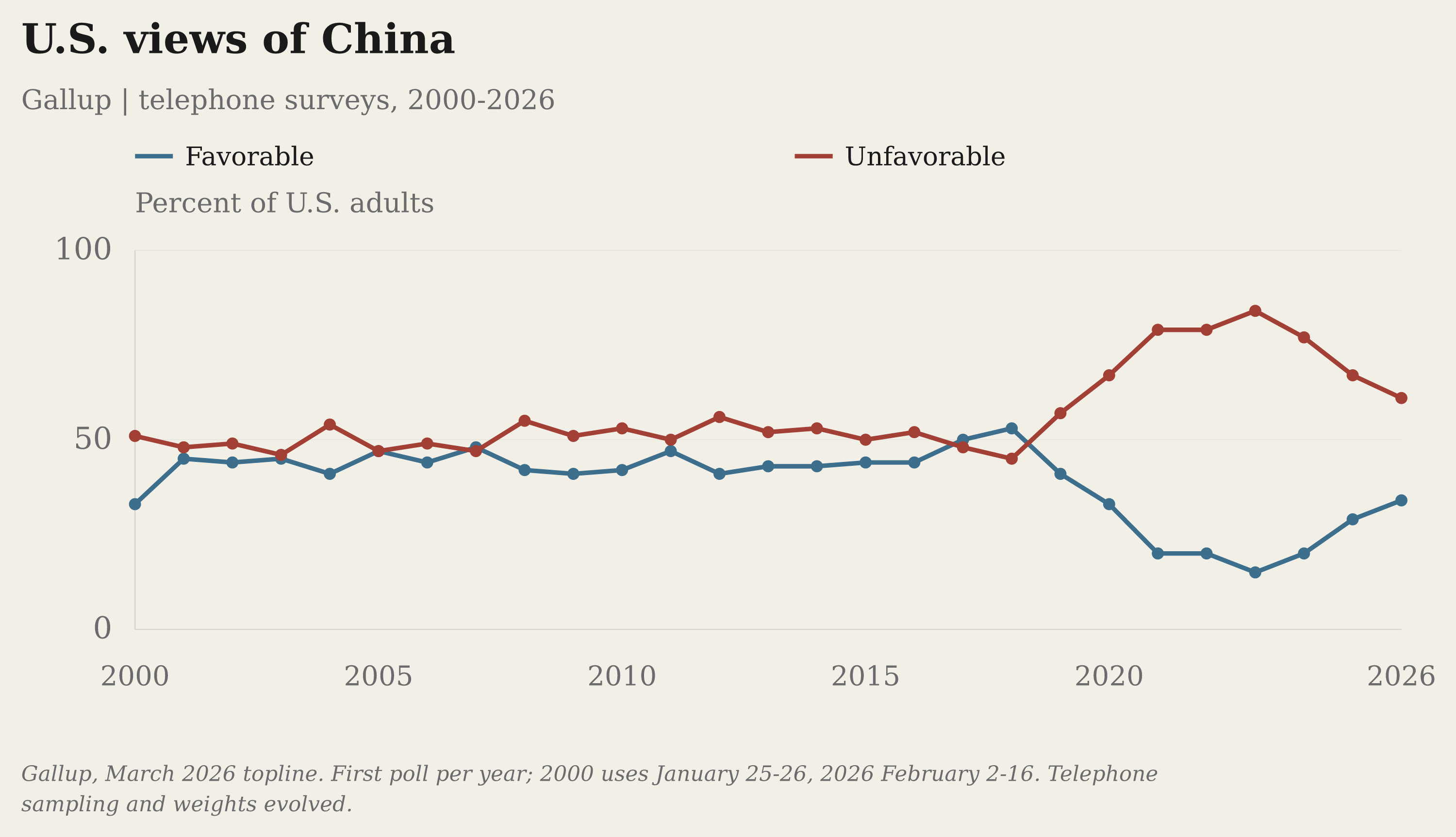
After becoming more negative during the COVID-19 pandemic, attitudes toward China have warmed in recent years, particularly among younger Americans. See here for details.
However, all of this talk of “Chinamaxxing” belies a decline in real-world relationships and exchanges between the U.S. and China. Indeed, a common critique of the “Chinamaxxing” trend is that it promotes superficial out-of-context fragments of Chinese culture and is driven more by frustration with American and European political systems rather than a genuine interest in China. Just seven years ago, in 2019, amid mass protests in Hong Kong against Beijing’s growing involvement in the city’s internal affairs, #StandWithHK was a common hashtag on many of the same social media platforms now celebrating mainland China’s technological, cultural, and economic advances.
The apparent contradiction of “Chinamaxxing” is that while China has arguably never been more visible in American popular culture, the personal connections and exchanges that could allow Americans to deeply understand the country are deteriorating. Even as influencers proclaim that they are in their “Chinese era” while drinking hot water — a common practice in China, where hot water is often served instead of cold — American tourism to China, Mandarin Chinese enrollment at U.S. universities, and migration between the two countries remain far below pre-pandemic levels. While both countries describe the U.S.-China relationship as one of the world's most important and consequential bilateral relationships, the decline in face-to-face interactions between their populations threatens to leave both sides with a poorer understanding of one another.
Fewer Visits, Fewer Exchanges
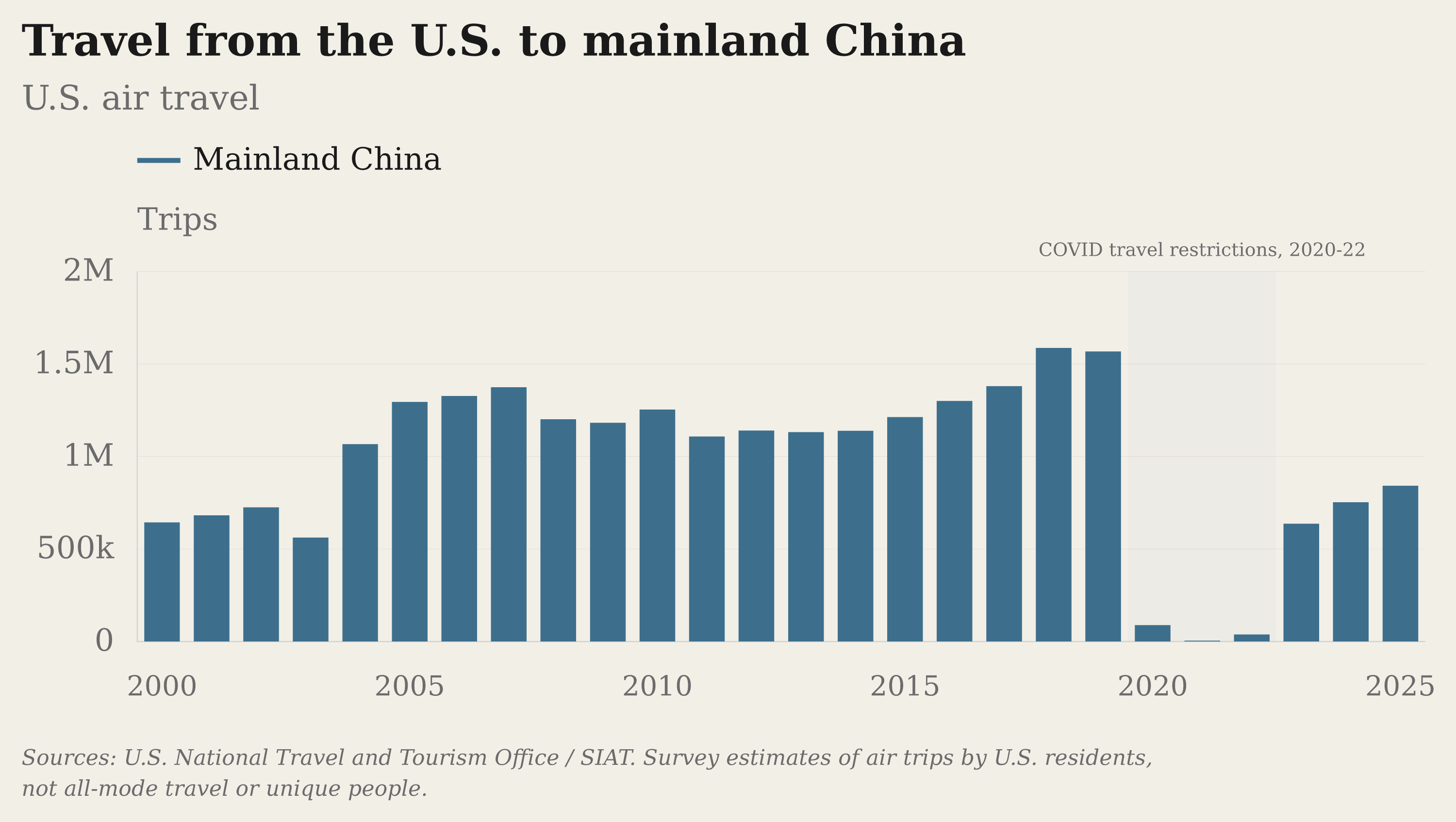
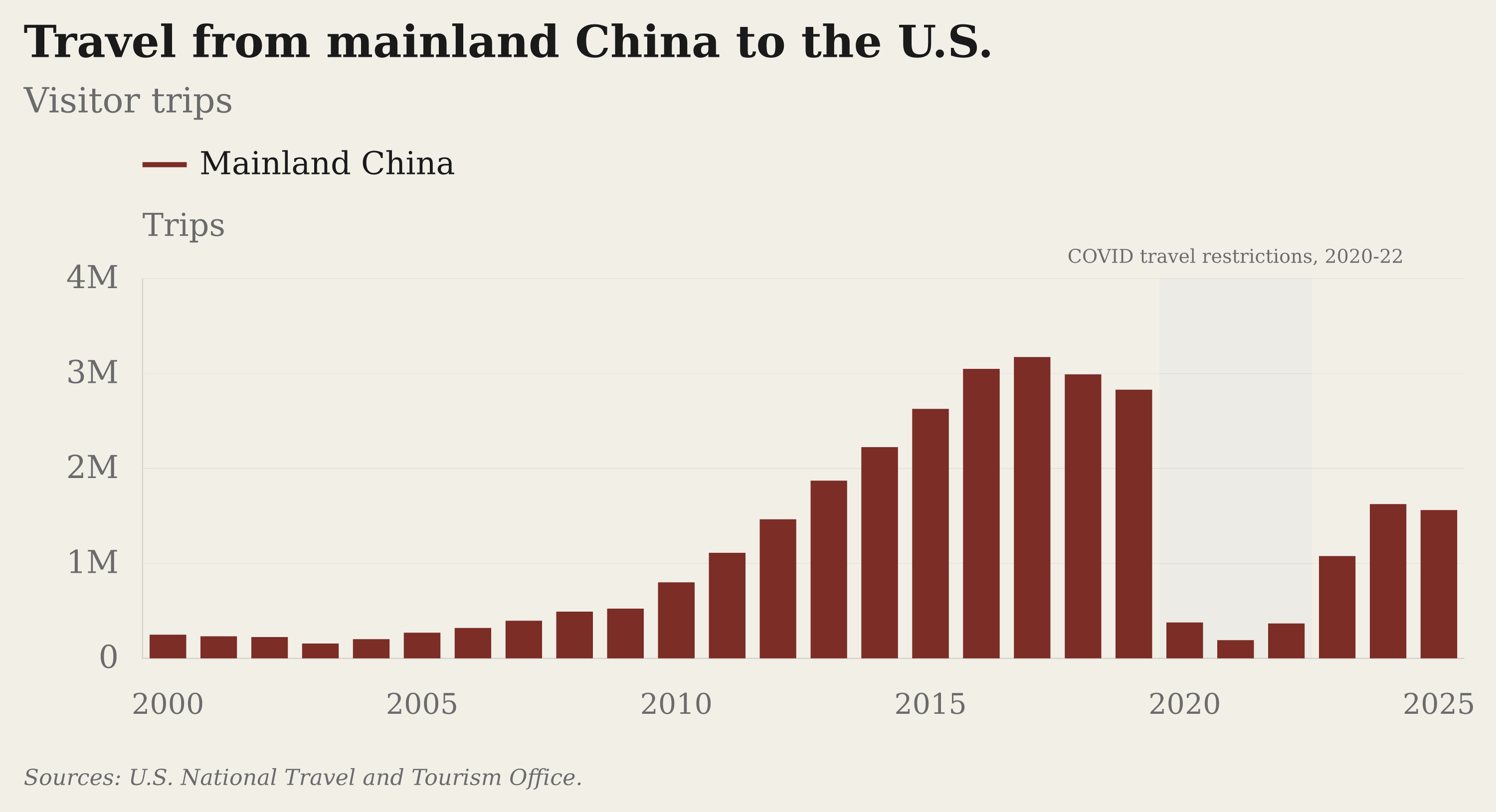
While the number of trips by famous influencers has increased in recent years, travel between the U.S. and China remains at roughly half its 2019 level. According to the U.S. National Travel and Tourism Office, the number of trips from the U.S. to China has fallen by 44.8% since the COVID-19 pandemic, while the number of travelers from China to the U.S. has declined by 46.3% over the same period. Pictures of cities like Chongqing (重庆) may fill U.S. social media feeds, showcasing China's technological and infrastructure advancements, but fewer Americans are visiting these cities themselves.

Picture from my recent trip to China of Hongya Cave (洪崖洞, Hóngyádòng) in Chongqing, China (重庆) .
Indeed, while there were over 150 round-trip flights each week between China and the U.S. in 2019, this number remains at only a third of its pre-pandemic level as of October 2026. U.S. carriers' lack of access to Russian airspace following Russia's invasion of Ukraine in 2022 has further limited opportunities for flights between the two countries. While Chinese President Xí Jìnpíng (习近平) broached the possibility of increasing the number of flights between the U.S. and China at a summit in September, the proposal was quickly shelved.
The decline in travel between the United States and China has been accompanied by an even more precipitous collapse: in 2024, the number of Americans studying in China had fallen to just 15% of its 2019 level. This comes as the U.S. government has substantially reduced funding for American students to study in China. Longstanding exchange programs, including Fulbright and Boren fellowships, the Peace Corps, and the State Department's Critical Language Scholarship Program, have been suspended, severely limited, or discontinued in mainland China. In addition to the lack of funded opportunities to study in China, many potential students worry about the increasingly restrictive academic environment, censorship, and exit bans. While a recent invitation from Chinese President Xí Jìnpíng (习近平) for 100,000 American students to study in China may increase enrollment, the lack of U.S. funding remains an obstacle.
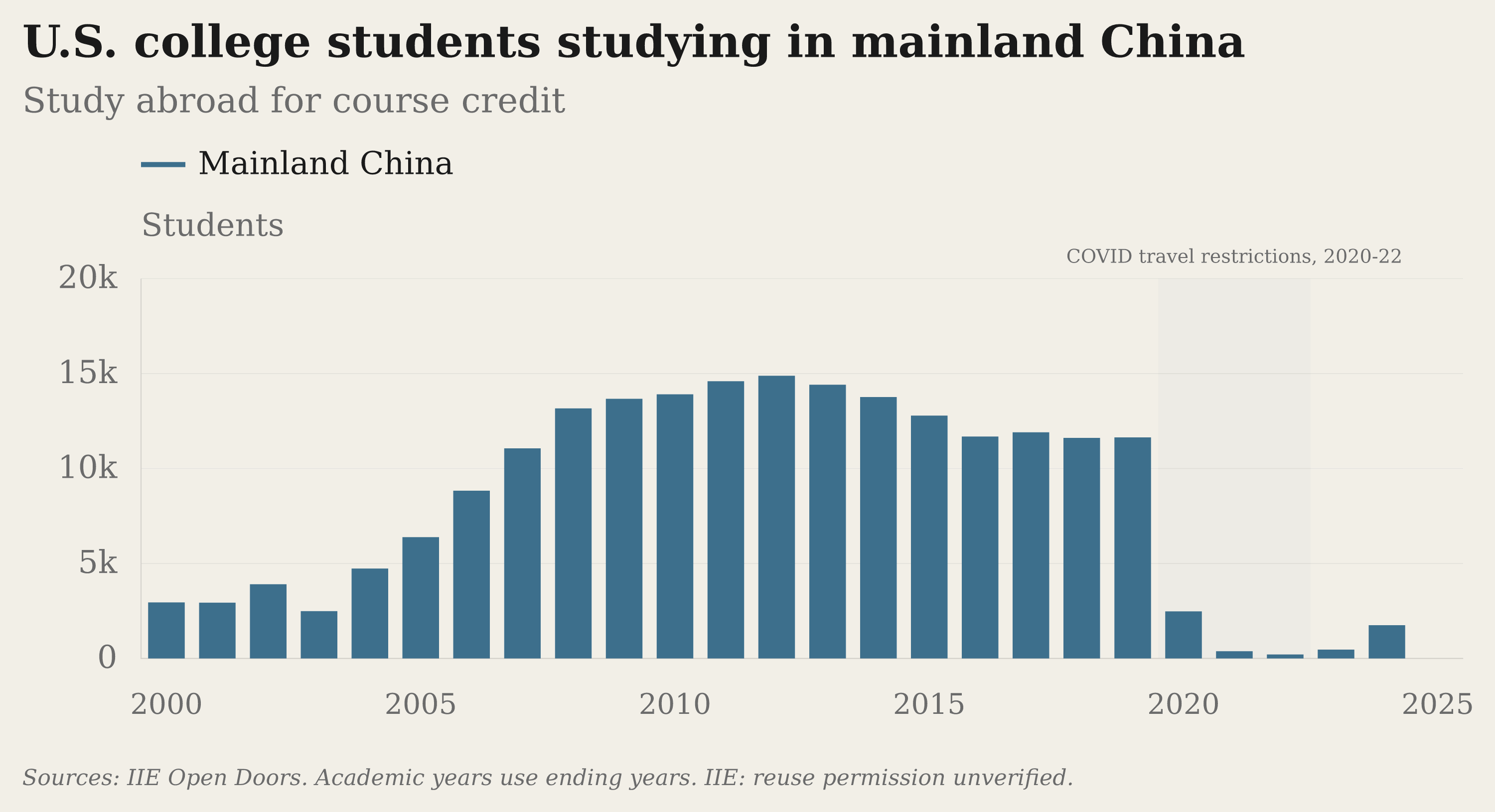
The falling number of young Americans studying, working, and traveling in China may be part of a broader decline in interest in learning Mandarin and engaging deeply with Chinese culture. Despite being the world’s most widely spoken native language, Mandarin attracts fewer students than Japanese at American universities. As The Economist has noted, interest in studying Mandarin has declined across much of the developed world, and the United States is no exception.
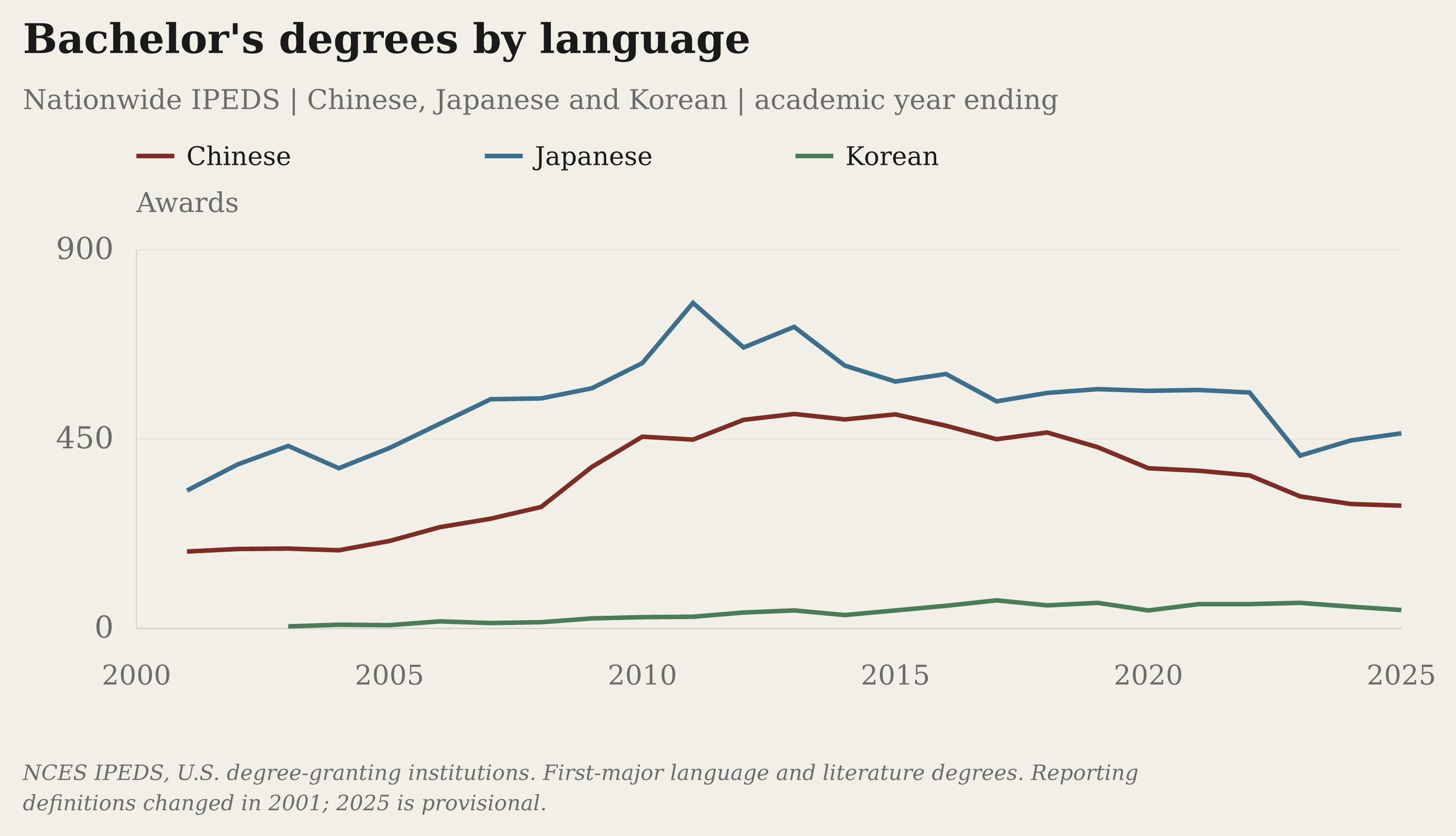
While foreign-language learning is declining more generally, with A.I.-powered translation tools potentially further weakening the incentive to learn another language, Chinese has experienced particularly steep declines over the past decade. Since 2013, the number of students earning bachelor’s degrees in Chinese has fallen by 43%, compared with a 35% decline in Japanese and a 2.3% increase in Korean (K-pop and Parasite for the win!). The closure of nearly all Confucius Institutes in the U.S. amid security concerns about Chinese government influence has further reduced access to cheap Chinese-language instruction for many Americans. This decline is particularly worrying given how deeply Chinese writing is connected with the country's culture and history. As a Mandarin learner myself, I have found that learning the language — and particularly its characters, or 汉字 — opens a window into Chinese culture that Google Translate alone cannot. As Yale professor Jing Tsu writes in Kingdom of Characters, the history of Chinese writing is inseparable from China's broader political and cultural development.
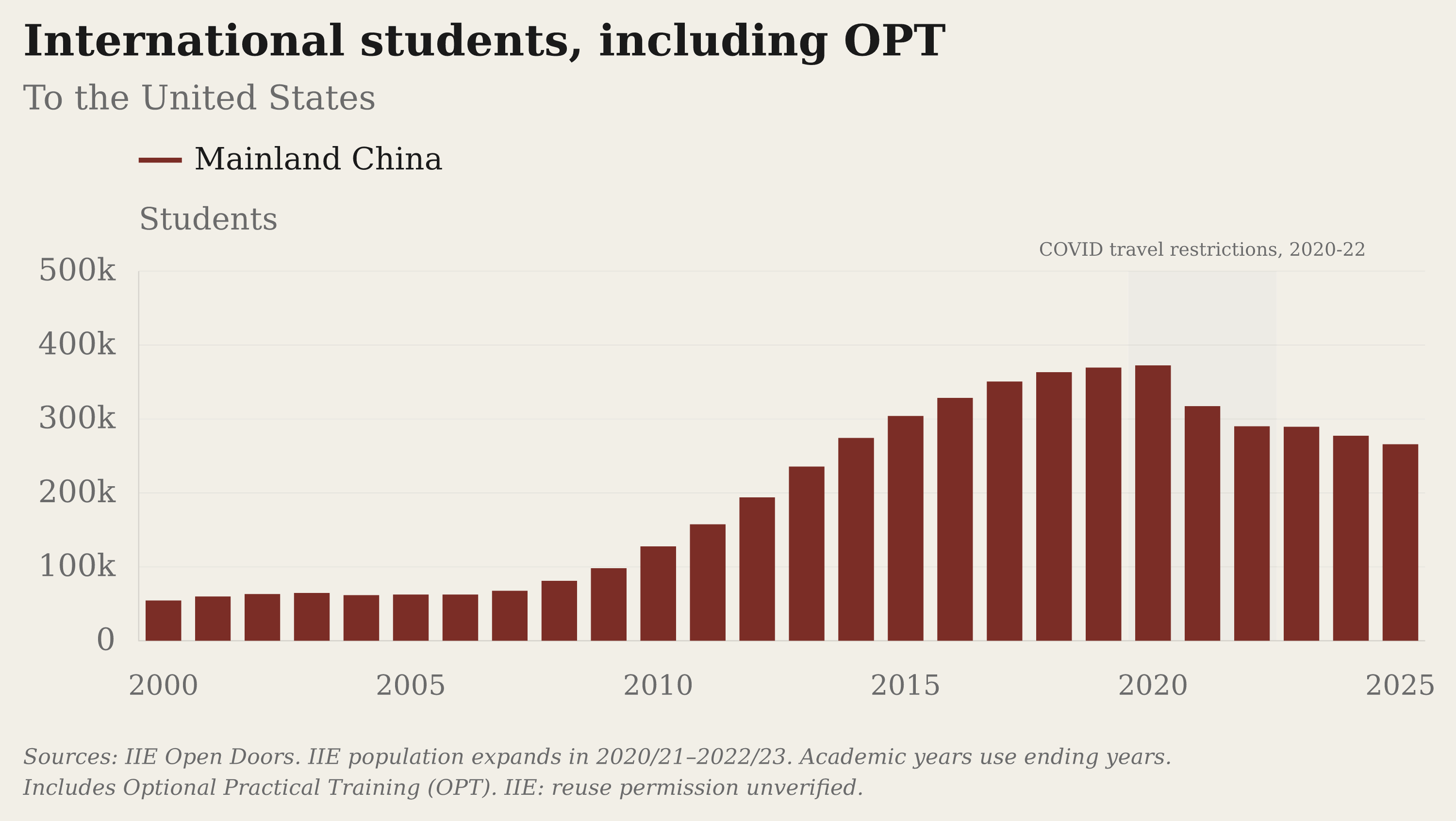
The decline in Chinese-language learning in the U.S. stands in stark contrast to the widespread study of English in China.2 Although English is not technically mandatory on China’s university entrance examination, the Gāokǎo (高考), over 99% of candidates chose English in 2019. This widespread familiarity with English may make studying in the U.S. more attractive to Chinese students than studying in China is to their American counterparts. However, fewer and fewer Chinese students are choosing to study in the U.S., with the number falling by 28% between 2019 and 2025.
While the aftermath of COVID-19 restrictions have continued to contribute to the decline, tighter U.S. visa requirements and increasingly restrictive immigration policies have also discouraged Chinese students from studying in the United States. For example, in May 2025, U.S. Secretary of State Marco Rubio announced that the U.S. would begin “aggressively revoking” Chinese students’ visas if they had connections to the Chinese Communist Party (CCP) or were studying in national security-related fields. However, applying to join the CCP in China is relatively commonplace, with a 2023 study finding that over 65% of Chinese college students have applied to join the party, which has over 101 million members. Even students who have never applied to join the CCP may have family members who belong to the party. Because the Trump administration initially failed to specify what constituted a connection to the CCP, the proposed restrictions cast uncertainty over the visa status of many of the hundreds of thousands of Chinese students in the United States.
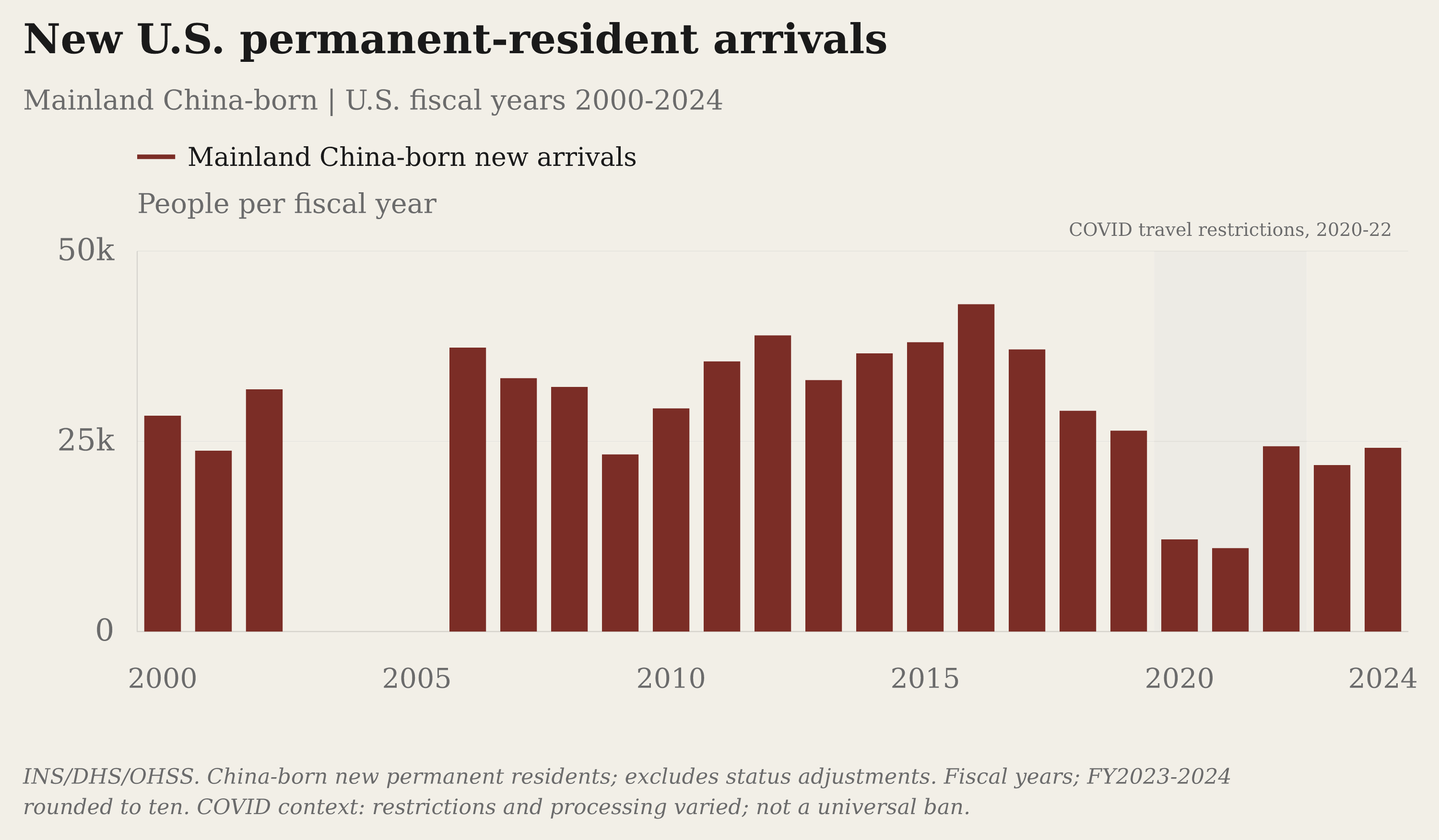
The lingering effects of COVID-19 restrictions, tighter U.S. immigration policies, and concerns about anti-Asian discrimination may help explain the decline in Chinese enrollment at American universities. These concerns are not unfounded: in 2024, 68% of Chinese graduate students reported experiencing discrimination off campus and 60% on campus. This decline in students may also be part of a wider trend of falling Chinese immigration to the U.S.. More broadly, the number of Chinese nationals obtaining U.S. permanent residency has also declined, falling from 81,913 in 2016 to 65,670 in 2025 — a decrease of 19.8%.
Blind Spots
While attending a recent talk at the Asia Society in New York City, a journalist friend of mine seemed to know nearly everyone in the room. After exchanging greetings with one person after another, he remarked to me that the community of U.S.-based journalists covering China had become so small that it was hardly surprising he knew almost everyone there. For this already small group, reporting from within China has become increasingly difficult in recent decades. China's expulsions of foreign correspondents throughout the 2010s, culminating in a much larger wave of expulsions in 2020, have curtailed opportunities for sustained reporting from within the country.
The challenges facing foreign correspondents are emblematic of a broader decline in Americans’ firsthand engagement with China. Taken together, the expulsions of journalists, declining Chinese-language expertise, and reduced travel have left the United States increasingly ill-equipped to fully understand what is America’s most consequential bilateral relationship. Despite the era of Gen Z “Chinamaxxing,” a March 2026 report by the U.S.-China Education Trust warned that the United States could face “a critical shortage of grounded China expertise” within the next decade.
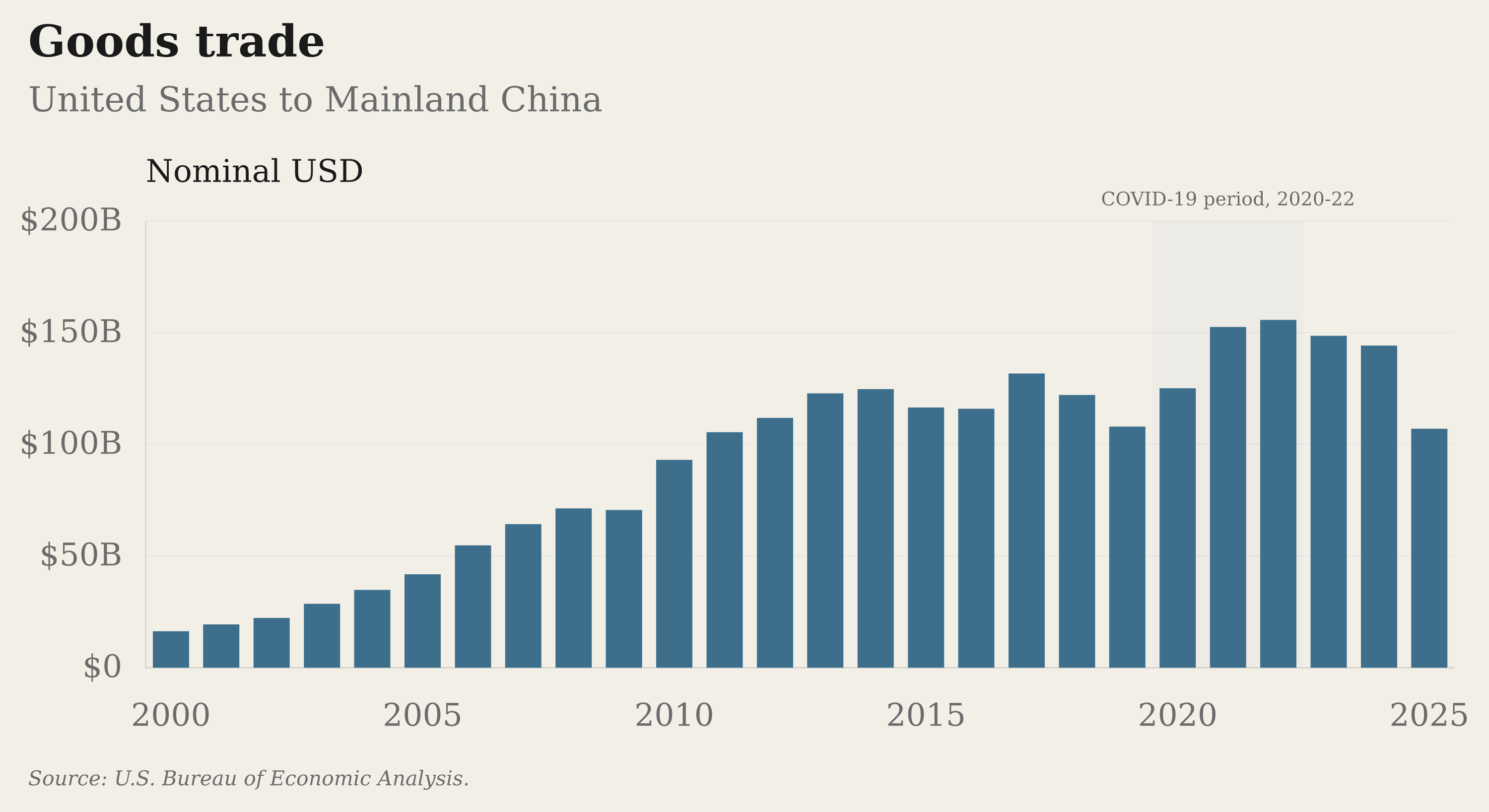
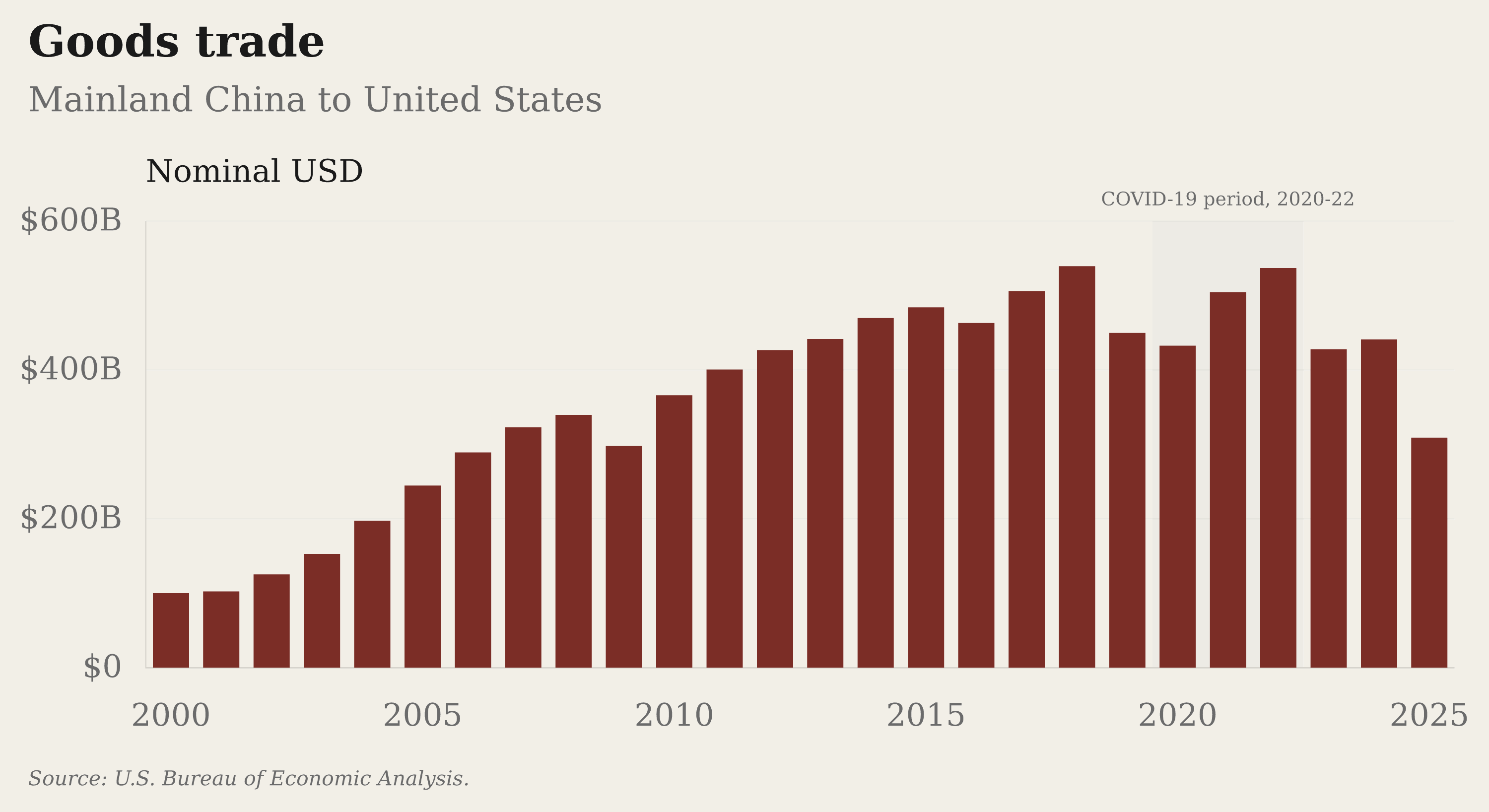
There is a counterargument for not bewailing this estrangement. The U.S. and China are already decoupling and de-risking: between 2022 and 2025, U.S. goods exports to China fell by 31%, while Chinese exports to the U.S. fell by 42%. If the United States is to treat China as a strategic competitor, perhaps a reduction in economic and educational ties is the unavoidable cost of protecting national security. For example, a 2020 Axios investigation revealed how Christine Fang, a suspected Chinese intelligence operative, cultivated relationships with American politicians, including former Representative Eric Swalwell, allegedly to gather political intelligence and influence U.S. policymaking. The case, some argue, illustrates how seemingly ordinary relationships can potentially be exploited for intelligence gathering and foreign influence. Protecting sensitive information and preventing espionage are legitimate concerns. However, there is a distinction between preventing espionage and discouraging ordinary Americans from acquiring firsthand knowledge of China. The same strategic competition that motivates tighter security measures makes deep expertise and familiarity with China all the more valuable.
While further economic disentanglement between the two countries is plausible, if not inevitable — both the Trump and Biden administrations have pursued policies of de-risking — there are many areas, from climate change to A.I. safety, in which cooperation between the world's two largest economic and military powers remains critical. In an era when the U.S. and China both face sustained cyber, biological, and social threats posed by A.I., not speaking with one another is not an option. Already, many A.I. safety discussions at U.S.-based labs are increasingly disconnected from those at China-based labs — less understanding and less communication would worsen this. As noted by David Lampton of the U.S.-China Education Trust, “mutual ignorance is in no one’s interest.”
There are some bright spots, though, in the apparent decoupling between the United States and China. Not every avenue for cultural exchange between ordinary American and Chinese citizens has closed. For example, since 2016, the prestigious Schwarzman Scholars (苏世民学者) program has brought students from the U.S. and around the world to Tsinghua University (清华大学), helping to foster educational and cultural ties. Enrollment of Chinese students at American universities, while declining, remains substantial. Perhaps even “Chinamaxxing,” however superficial the trend may seem, will inspire a few members of Gen Z and Gen Alpha to learn some 汉字 and visit China for themselves.
Explore the data behind the change in U.S.–China relations through interactive graphs, or browse the analysis code on GitHub.
Throughout this piece, I am referring to the People's Republic of China (PRC) as China, rather than the Republic of China (ROC/Taiwan).
↩There has been increasing debate in China over whether English should remain a core part of Chinese education: https://thediplomat.com/2026/09/a-debate-is-raging-in-china-over-english-education/
↩